AFWERX and SpaceWERX hand deep-tech founders non-dilutive contracts — Open Topic SBIR, TACFI, and STRATFI — but the matching math trips up almost everyone. We explain the funding ladder in plain English, from a $75K Phase I to the new $30M Strategic Breakthrough tier. Then we show how engineering simulation de-risks the aero, thermal, structural, and RF work the Air and Space Force actually pay for. For funded startups, stealth teams, and founders who haven't incorporated yet.
Specific, current AFWERX / SpaceWERX — STRATFI & TACFI funding — what it is, how to apply, the stages, who gets accepted, and the events where it's decided. Everything links to the official source.
The technology these funders back usually has to be simulated before it's believed. We arrange Ansys evaluation licenses, live engineering support, and free learning — so you can build the MVP that wins.
You're looking for funding in this ecosystem — and you have (or will have) technology that needs to be simulated to prove it works.
The entry door for dual-use tech that the Air Force didn't ask for by name. A short feasibility study to prove your idea is real and has a defense use case.
~$75K (SBIR) / ~$110K (STTR) · Non-dilutive
Prototype and demonstrate the technology with a real Air or Space Force end user. This is where the money and the customer relationship get serious.
~$1.25M–$1.9M · Non-dilutive
A bridge for a strong Phase II that needs more runway. TACFI adds SBIR dollars on top of your existing work as long as you bring matching money.
~$375K–$2M over ~2 years · Non-dilutive
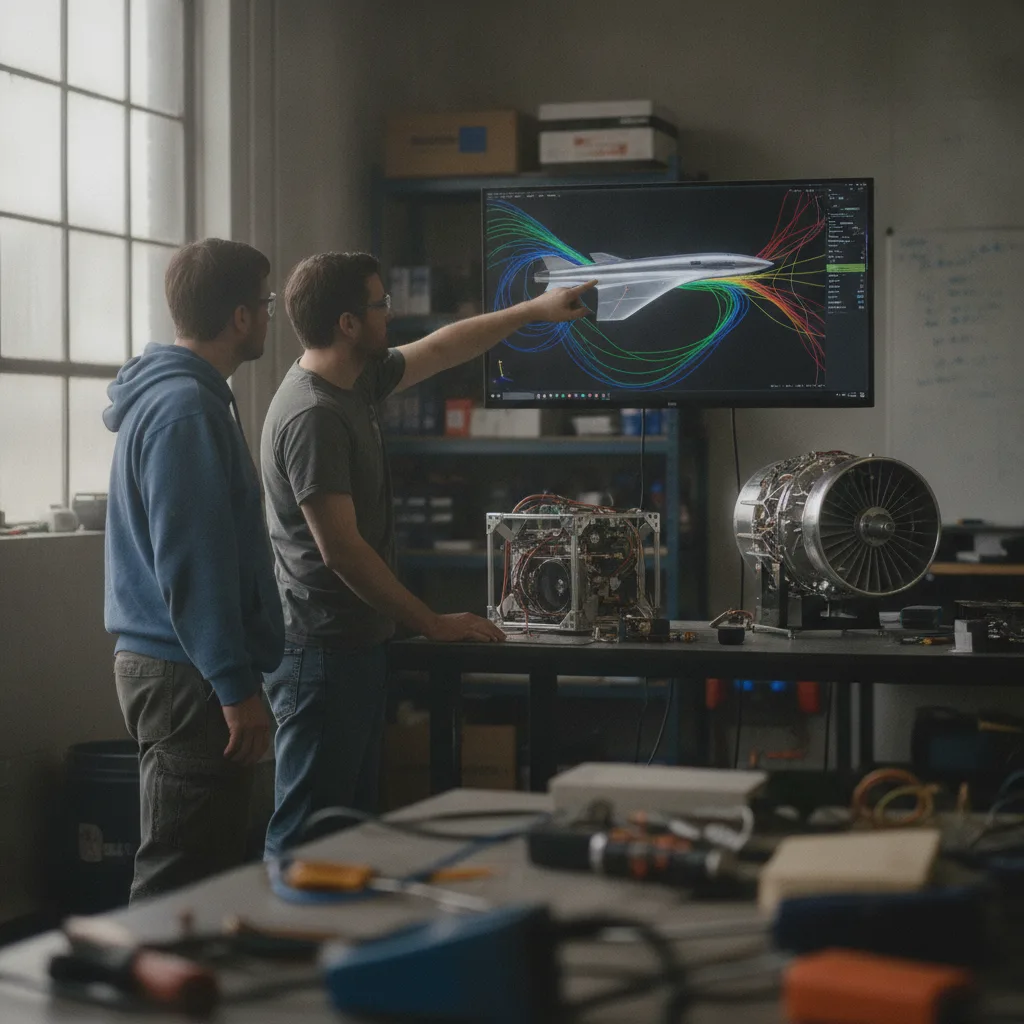
Model lift, drag, and shock structure across the flight envelope before a wind-tunnel slot opens. For hypersonic demonstrators, external aero drives the entire vehicle configuration — and reviewers want to see it.
At Mach 5+ the air becomes a heat source. Couple high-speed CFD with structural thermal to size thermal-protection systems and predict skin temperatures on leading edges and control surfaces.
Simulate combustion, conjugate heat transfer, and cooling flows in a thrust chamber or ramjet before a hot-fire that costs six figures. Iterate injector and cooling-channel designs virtually.
Not to start learning the landscape — but to win a contract you'll need a registered US small business (under 500 employees, majority US-owned) with active SAM.gov and DSIP registrations. Those registrations take time, so if you're pre-incorporation, begin them early. Nothing on this site requires you to be incorporated to read it.
No. SBIR/STTR contracts, TACFI, STRATFI, and the new Strategic Breakthrough tier are all non-dilutive — they're contracts, not equity investments. The matching-money side of STRATFI/TACFI may involve private investors who do take equity, but that's a separate, optional relationship you choose.
Roughly: Phase I ~$75K over ~3 months; Phase II ~$1.25M–$1.9M over ~15–24 months; TACFI ~$375K–$2M; STRATFI ~$3M–$15M; and the new Strategic Breakthrough tier up to ~$30M. Amounts and timelines vary by cycle and are approximate — always confirm on the official AFWERX and SpaceWERX pages before you plan around a number.
AFWERX is the innovation arm of the Department of the Air Force (a directorate within AFRL); SpaceWERX is the US Space Force counterpart. They share the same funding ladder and tools. Pick based on where your technology fits — air-domain work goes to AFWERX, on-orbit and launch to SpaceWERX — though plenty of dual-use tech is relevant to both.
No — it's not a requirement. But most of what these agencies fund is physics-heavy hardware, and credible engineering analysis makes a much stronger feasibility and prototype case than hand-waving. Simulation is a way to de-risk the build and produce evidence reviewers respect, not a box to check.
We can help arrange an Ansys evaluation license, live engineering support, and free learning content through a channel partner. To be clear: evaluation licenses and the Ansys Startup Program are Ansys programs, offered at Ansys and partner sole discretion, and you're free to use any partner you like. Everything on this site is informational — nothing here is promised, guaranteed, or owed.
Chasing one program often means you qualify for others you haven't heard of. These sister guides cover more of the U.S. non-dilutive landscape — same honest, no-nonsense approach. Not sure which fits what you're building? Ask us — we'll point you at the right doors, even the ones that aren't ours.
America's ~$4B/yr non-dilutive seed fund across 11 agencies.
Visit →Commercial tech to DoD via fast OTA prototype contracts.
Visit →Tipping Point, TechFlights, NIAC and the space startup ladder.
Visit →Army prize competitions with a fast lane into Army SBIR.
Visit →Tell us what you're building and what you're chasing. We'll tell you what funding might fit and what an Ansys eval could cover — no cost, no obligation.
